Sunday, August 21, 2011

Lariscus Insignis


Lariscus Insignis

Squirrel and Squirrel are a different animal, although many people regard it as the same animal. Squirrel and Squirrel have differences, at first glance similar to the squirrel squirrel, but different anatomy and behavior. Squirrels have a very long snout (the face, mouth and nose) while the squirrel is relatively little flat at the mouth and nose.

Squirrel is a rodent mammal (order Rodentia) from the tribe (family) Sciuridae which in English is called squirrel. While the squirrel comes from the family and Ptilocercidae Tupaiidae which in English is called treeshrew. In scientific (biological sciences), unlike Squirrels Squirrel, even very much related.

In terms of food was different. Squirrels are rodents that eat the fruit while the squirrel is an insect-eating animals.
squirrel

Squirrel Squirrel different. Squirrels are small mammals of the nation Scandentia is often confused with Squirrel. Many squirrels prey on insects, so that once inserted into the nation (the order) Insectivora (insect-eaters). Squirrels are characteristic of having very long snout on the front of the mouth and nose there.

Squirrels are members of the nation Scandentia consisting of two tribes (family) that is Tupaiidae and Ptilocercidae. Indonesia has the world's largest squirrel species. Of the 20 species of squirrel in the world, 12 of them owned by Indonesia. Squirrel species in Indonesia are among others:
Small squirrel-tail (Dendrogale melanura). in Kalimantan
Mentawai Squirrel (Tupaia chrysogaster). Endemic to the Mentawai Islands.
Striped squirrel (Tupaia dorsalis). Borneo
Squirrel root (Tupaia glis). Borneo, Sumatra, Java and the Malay Peninsula.
Slender squirrel (Tupaia gracilis). Borneo, Karimata, Bangka and Belitung.
Kekes squirrel (Tupaia javanica). Sumatra, Nias, Java and Bali.
Small squirrel (Tupaia minor). Sumatra, Borneo and the Malay Peninsula.
Squirrel mountain (Tupaia montana). Limited in the mountains of northern Borneo.
Tercat squirrel (Tupaia picta). Kalimantan.
Beautiful squirrel (Tupaia splendidula). The southern part of Borneo, Karimata, Natuna, and Sea Island.
Ground squirrels (Tupaia tana). Sumatra and Kalimantan.
Brush-tailed squirrel (Ptilocercus lowii). Malay Peninsula, Sumatra, Borneo and surrounding islands.

Scientific classification: Kingdom: Animalia; Phylum: Chordata: Sub-phylum: Vertebrata; Class: Mammalia; Order: Scandentia: Family: Tupaiidae and Ptilocercidae.

There are squirrels living in the land there that live in trees. Even the squirrels from the subspecies Pteromyini capable of flying (flying from top to bottom), because this type has a membrane (a thin membrane) between the front and rear legs that allow floating away among the trees.

Unlike the Squirrels that eat insects, squirrels are rodents that eat the fruit. Often these animals are considered as pests mainly on coconut plantations and fruit plantations. Perhaps because the animals are considered pests and destroyer is then the term 'bastard'.

Squirrel consists of 51 genera and 278 species (kinds). Several types of squirrels found in Indonesia, among others:
Ratufa bicolor (Jelarang); tropical and subtropical forests in Asia, including Indonesia.
Callosciurrus prevostii (Squirrel Three Colors); Kalimantan
Callosciurrus nigrovittatus (Black Squirrel), Thailand, Malaya Peninsula, Sumatra and Java.
Callosciurrus notatus (Squirrel Coconut), located on the Malay Peninsula, Sumatra, Borneo, Java, Bali and Lombok, and islands around it
Callosciurrus adamsi (Squirrel Ear Bottles); Endemic Kalimantan
Callosciurrus Orestes (Grey Squirrel); found in Borneo
Sundasciurus hippurus (Squirrel Tail Horse): Kalimantan
Sundasciurus lowii (Squirrel Short Tailed): Kalimantan
Sundasciurus tenuis (Squirrel Bancirot); Kalimantan
Sundasciurus jentinki (Squirrel Jentink); Kalimantan
Sundasciurus brookei (Squirrel Brooke); Kalimantan
Sundasciurus juvencus (Squirrel Palawan); Java and Bali
Glyphotes Simus (Stomach Little Red Squirrel); Endemic Kalimantan
Nannosciurus melanotis (Black Squirrel Little ears); Java and Kalimantan
Rubrisciurus rubriventer (Squirrel Large Sulawesi); Sulawesi Endemic
Petinomys hageni (Chief Flying Squirrel Tengguli): Malay Peninsula, Sumatra, Java, and Kalimantan
Petinomys genibarbis (Flying Squirrel Berjambang): Malay Peninsula, Sumatra, Java, and Kalimantan
Petinomys setosus (Dada Flying Squirrel White): the Malay Peninsula, Sumatra, Java, and Kalimantan
Petinomys vordermanni (Flying Squirrel Cheeks Orange); the Malay Peninsula, Sumatra, Java, and Kalimantan
Petinomys Sagitta (Javanese Flying Squirrel), Malay Peninsula, Sumatra, Java, and Kalimantan
Lariscus insignis (Three Striped Squirrel Land); Kalimantan
Dremomys everetii (Squirrel Mountain); Kalimantan
Rhinosciurus laticaudatus (Squirrel Land Muzzle Runcing); Kalimantan
Exilisciurus exilis (Little Squirrel Lowland); Kalimantan
Exilisciurus whiteheady (Little Squirrel Ear Kuncung): Kalimantan
Rheithrosciurus macrotis (Squirrel Tail Soil Portrait)
Petaurillus Hosei (Hose Flying Squirrel)
Lomys Horsfield (Red Tail Flying Squirrel)
Aeromys tephromelas (Black Flying Squirrel)
Hylopetes lepidus (Gray Cheek Flying Squirrel)
Pteromyscus pulverulentus (powdery Flying Squirrel)
Petaurista petaurista (Rakasasa Red Flying Squirrel)

Actually there are many other kinds of squirrels in Indonesia, but as a picture this is all I have to say.
READ MORE - Lariscus Insignis

Rhinoceros sondaicus


Javan rhinoceros (Rhinoceros sondaicus) is one of the rarest species in the world with an estimated population of no more than 60 individuals in Ujung Kulon National Park (TNUK), and approximately eight individuals in Cat Tien National Park, Vietnam (2000). Javan rhino is also the rarest rhino species among the five species of rhinos in the world and entered the Red List of IUCN world conservation body, namely the category of critically endangered or critically endangered.

Rhino is believed to have existed since the Tertiary era (65 million years ago). Like the dinosaurs that became extinct, Rhinoceros at 60 million years ago has 30 types of many extinct. Currently only the remaining five species of rhinos, including two species found in Indonesia.

Different species of rhinos surviving namely;
Sumatran Rhino (Sumatran rhino) horned two or Dicerorhinus sumatrensis. There on the island of Sumatra (Indonesia) and Borneo (Indonesia and Malaysia).
Javan rhino (Javan rhino) one-horned or Rhinocerus sondaicus. There are in Java (Indonesia) and Vietnam
Indian Rhinoceros (Indian rhino) or Rhinocerus unicornis one-horned. Artifacts in India and Nepal.
Black-horned African rhinoceros horn (Black Rhino) or Diceros bicormis. There is in Kenya, Tanzania, Cameroon, South Africa, Namibia and Zimbabwe.
African two-horned rhinoceros White (White Rhino) or Cerathoterium simum. There in the Congo.

Javan Rhino generally have a gray body color blackish. Having one horn, with a length of about 25 cm but it is possible not grow or is very small in females. Weight of a Javan rhino can reach 900 - 2300 kg with a body length of about 2-4 m. The height can reach almost 1.7 m.

Skin Javan rhinoceros (Rhinocerus sondaicus) have some sort of folds so that it looks like wearing a shield of steel. Having a way similar to India but the rhino's body and his head is smaller with fewer number of folds. More prominent upper lip so that it can be used to grab food and put it into his mouth. Rhino including the type of shy and solitary (solitary).
Population of Javan rhinoceros (Rhinocerus sondaicus)

In Indonesia, the Javan rhino is estimated formerly scattered in Sumatra and Java. At that time Sumatra, one-horned rhinos are scattered in Aceh to Lampung. In Java, the Javan rhinoceros, once widespread throughout Java.

Javan rhino is now found only in the Ujung Kulon National Park (TNUT), Banten. Besides in Indonesia Javan rhinoceros (Rhinocerus sondaicus) is also found in Cat Tien National Park, Vietnam. Individuals outside TNUT last, was found shot by poachers in Tasikmalaya in 1934. Now specimennya stored in the Museum of Zoology Bogor.

Rhino is probably the rarest mammals on earth. Based on the population of Javan rhino census conducted by the Center TNUK, WWF - IP and YMR in 2001 estimated the number of rhinos in Ujung Kulon population ranges between 50 - 60 head. The last census conducted TN Ujung Kulon Hall in 2006 estimated the range of the Javan population is 20-27 tail. While the population in the Cat Tien National Park, Vietnam, estimated that only 8 tails (2007).

Population of one-horned rhino (Rhinoceros Java) that only 30's tail is much smaller than the population of his brother, Sumatran Rhinoceros which is estimated to range between 215 -319 tail. Also much less than the population of other animals such as Sumatran Tiger (400-500 tail), Eagle Java (600's tail), Anoa (5000 head).
Javan Rhino Conservation and Protection

In the year 1910 as the Javan rhinoceros, wild animals are officially protected by the Act by the Government of the Netherlands East Indies, so in 1921 based on recommendations from The Netherlands Indies Society for Protection of Nature, Ujung Kulon by the Dutch government declared a Nature Reserve. This situation still continues until the status changed to Ujung Kulon Wildlife Reserve under the management of the Forestry Bureau and the National Park in 1982.

Javan rhinoceros (Rhinoceros-horned one) who live together in one main area is very vulnerable to extinction can be caused by disease, natural disasters such as tsunami, eruption of the Krakatoa volcano, earthquake. In addition, it also lacks rhinos roaming space and resources due to the invasion Langkap (Arenga) and competition with bulls.

Initial studies WWF identify particular niches suitable, safe and relatively close is Hazy National Park on Mount Salak, West Java, who had also a habitat for the Javan rhinoceros. If the second habitat is found, then the rhino a healthy, good, and meet the criteria in Ujung Kulon is sent to the new territory. Habitat will also guarantee the security of the population
READ MORE - Rhinoceros sondaicus

babirusa


Babirusas live on the national territory of Indonesia, which consists of many islands and archipelagos. They inhabit the island of Sulawesi, the Togian Islands and the Moluccan Islands. The populations of the three distribution ranges differ from each other in several markings, allowing researchers to establish three subspecies of the Babirusa - the Sulawesi babirusa, the Togian babirusa and the Moluccan babirusa. The prefered habitat of all subspecies is the rainforest. Here they live solitary or in small groups, moving mostly on firm trails within their territories. Like all pigs Babirusas like wallowing to get rid of skin parasites. Their diet consists of fruits and nuts. Very sought-after are mangos, but also mushrooms and leaves are taken. Babirusas get animal protein in the form of insects, which they often flush in rotten wood. In contrast to Wild boars, Babirusas avoid farmland and thus conflicts with farmers. Nevertheless they are hunted for their meat - in spite of laws protecting them. In addition the conversion of forests into areas used for agriculture contributes to the decline of the populations. Babirusas have always been scarce, but today they are very endangered. The few zoos, which are keeping Babirusas, try to breed them in coordinated breeding programs. The one to three piglets are born after a pregnancy of about five months. They take solid food, when just a few days old, are weaned at an age of six to eight months and become sexually mature after one to two years. Babirusas reach an maximum age of 24 years.

Babyrousa Babyrussa -- (Indonesian wild pig with enormous curved canine teeth)
babirusa
babiroussa
babirussa
Babyrousa Babyrussa

The babirusa lives in the rainforests of Sulawesi, an island in southeast Asia that is controlled by Indonesia. The babirusa belongs to the pig family and is usually found near rivers and lakes.

The babirusa has an excellent sense of hearing and smell. The babirusa is an omnivore, meaning it feeds on a variety of foods including fruits, fungi, leaves, insect larvae, nuts and small animals.

Babirusa is native to the large eastern Indonesian island of Sulawesi and surrounding islands. Its habitat is the underbrush of tropical forests and canebrakes, and the shores of rivers and lakes. Its mostly-hairless, mottled-grey-and-brown hide provide it with a degree of camouflage. The babirusa is known for its two pairs of tusks; both its upper and its lower pairs of canine teeth are greatly enlarged, and curve up and back towards the head. The upper canines of the male babirusa are so curved and enlarged that they emerge through the flesh, by way of holes, to pass through the top of the snout.
READ MORE - babirusa

Sunday, August 14, 2011

Python reticulatus


Sanca flower is Python reticulatus a kind of venomous snakes are not large. The biggest size is said to exceed 10 meters. Longer than an anaconda (Eunectes), the largest and longest snake in South America. Other names are the python; snakes fields; rice-n-etem (Simeulue); snake petola (Ambon), and a reticulated python in English or often abbreviated retics.

Identification
Python is easily recognizable because the flowers are generally large. Family python (Pythonidae) relatively easily distinguished from other snakes by looking at the dorsal scales are more than 45 rows, and scales ventralnya narrower than the width of the underside of her body. In western Indonesia, there are five species: three species of short stature that is obese group peraca snake (Python curtus group: P. curtus, P. and P. brongersmai breitensteini) in Sumatra, Borneo and the Malay Peninsula.

Two other species are relatively long-bodied, solid muscular: P. molurus (python bodo) and P. reticulatus. Both are spread from Asia to the Great Sunda, including Java. P. molurus has a different developmental pattern of reticulatus, especially with the large V pattern in dark over his head. Sanca flowers have a pattern of circles shaped nets (reticula, nets), composed of the colors black, brown, yellow and white along the dorsal side of his body. A thin black line running over the head from nose to nape, resembling the center line that divides the two sides of the head symmetrically. And each one other black lines that are thicker on each side of the head, through the eyes back.

The scales of the dorsal (back) are arranged in rows 70-80; scales ventral (stomach) as much as 297-332 pieces, from below the neck to the anus; subkaudal scales (the bottom side of the tail) 75-102 pairs. Rostral shield (scales on the tip of the snout) and four shields supralabial (scales on the upper lip) leading edge has a groove hole smell heat (heat sensor pits) are in (Tweedie 1983).

Biology and Distribution

Python snake countless flowers of the largest and longest in the world. The Guinness Book of World Records in 1991 noted python development along 32 feet 9.5 inches (about 10 meters) as the longest snake (Murphy and Henderson 1997). But the common is snakes measuring 5-8 meters. While the maximum recorded weight was 158 kg (347.6 lbs). Python snake which includes long-lived, up to more than 25 years.

The snakes females have larger bodies. If a male has started mating on body length about 7-9 feet, the new female at about 11 feet long. Adult sex is reached between the ages of 2-4 years.

Breeding season lasts from September to March in Asia. Reduced day length and decreasing the air temperature is a driving factor that stimulates the mating season. However, this season can vary from one place to another. Shine et al. 1999 find that the python flowers around Palembang, South Sumatra, spawn between September-October, while around Medan, North Sumatra, between the months of April-May.

Males and females will fast in the breeding season, so the body size becomes important here. Females will even continue fasting until the spawn, and very likely also to egg hatch.

Sanca flower laying between 10 to around 100 grains. These eggs 'incubation' at a temperature of 88-90 ° F (31-32 ° C) for 80-90 days, even more than 100 days. Female snake will encircle these eggs with a contract. Movement of these muscles generate heat which will increase the temperature of the eggs several degrees above ambient temperature. Females will guard the eggs from predators until they hatch. But only until that's all; once hatched, the babies were abandoned snakes and his fate handed to nature.

Sanca flowers spread in the forests of Southeast Asia. Starting from Kep. Nicobar Islands, Burma up to Indochina; south through the Malay Peninsula up to Sumatra, Borneo, Java, Nusa Tenggara (up to Timor), Sulawesi, and north to the Philippines (Murphy and Henderson 1997).

Sanca flower has three subspecies. Besides P.r. reticulatus that life is widespread, two more are Pr jampeanus a limited spread in the island Jampea Land and Pr saputrai a limited spread in Selayar Islands. Both off the south coast of South Sulawesi.

Ecology
Sanca flowers live in the forests of the humid tropics (Mattison, 1999). The snake is dependent on the availability of water, so often found not far from water bodies like rivers, ponds and swamps.

Its main food is small mammals, birds and other reptiles such as lizards. Small snakes prey on frogs, lizards and fish. Large snakes are reported to prey on dogs, monkeys, wild boar, deer, even the man who 'strayed' into place waiting for prey (Mattison 1999, Murphy and Henderson 1997, Shine et al. 1999). These snakes prefer to wait rather than actively hunting, perhaps because of his size is great to spend a lot of energy.

Prey being hamstrung by tight melilitnya (constricting) to death out of breath. Some of the bones in the chest and hip circumference may be broken by it. Then after dead prey swallowed whole from the head.

After eating, especially after swallowing large prey, these snakes will fast a few days to several months until he was hungry again. A python that are kept in Regent's Park in 1926 refused to eat for 23 months, but after that he was back to normal (Murphy and Henderson 1997).

Python and the Humans

Python-especially small-often maintained because of the relatively benign and beautiful skin. Folk performances, such as monkey masks, often carrying a python flowers that have been benign for the show. Local circus python also sometimes carry large to be exhibited or rented to take his picture.

Sanca many people hunted for its skin taken the beautiful and good quality. More than 500,000 pieces of python skin flowers are traded annually. Most of the skins are exported from Indonesia, with the main source of Sumatra and Kalimantan. All are caught in the wild.
READ MORE - Python reticulatus

snake the wire


Wire is a kind of snake is the world's smallest snake. Scientific name is Ramphotyphlops braminus (Daudin, 1803). While their names in other languages ​​are common blindsnake, Brahminy blindsnake, Flowerpot Snake, snake bootlace (Eng.); wire snake, worm snake (Ind.), snake duwel (Jw.).
Identification

Wire-bodied snake is very small, seems to sparkle like a small black piece of wire. Body length of up to 175 mm, but rarely longer than 15 cm. Most in fact about 10 cm or less.

His body is black, blackish, brownish, or bluish gray. Generally darker on the dorsal (back) and younger at the ventral side (belly). His tail is very short and in the end there is a similar runcingan thorns. Sometimes both ends (head and tail) younger or whitish color.

His eyes were hidden and only visible as a faint dark spots on the scales behind the head. Therefore, known in English as a blind snake (snake blind). Scales that cover the midsection arranged in 20 rows, very smooth and shape similar course at the dorsal and ventral.
Habits and ecology

These snakes are very similar to worms, both body size and behavior. Often found under furniture, behind the plant pots and in the yard, under rocks and rotten wood, these snakes quickly flounder like a worm when disturbed. But if one looks closely, these snakes appear to have a shiny scales and skin is not slimy.

Wire snake like that in such places to look for prey in the form of eggs ants, termites and various other small insects. His mouth was so small, and only enough to swallow prey that is also very small. Therefore the existence of thought, people think that snakes wire including a very kind of venomous snakes and can kill humans is a myth is unfounded. These snakes are not even capable of biting people.

Snakes are thought to breed in parthenogenesis, ie the eggs develop into an individual snake without fertilized by the male snake. This theory has emerged because of all this snake specimens collected were identified with female sex (Tweedie, 1983). Other snakes are also a type known to have the ability parthenogenesis is a snake sack Papua (Acrochordus arafurae).

Habits of this snake that lives under the ground (fossorial), its size is very small, and the ability partenogenesisnya, making it easy to snake wires is widespread; population can be formed with only one specimen is carried in the ground snakes in potted plants.
Deployment

The spread of this snake is very broad: Africa (Zanzibar, Tanzania, Mozambique, Somalia, Cameroon, Benin, Togo, Ivory Coast). Madagascar, Comoro islands, Mascarenes, Seychelles, Mauritius, Reunion, Rodrigues.

Tropical Asia (Arabia, Persia, India, Sri Lanka, Myanmar, Thailand, Indochina, southern China, southern Japan, Hongkong, Taiwan, Philippines, Malay Peninsula, and islands in the Indian Ocean).

Pacific (Guam, Solomon Islands, New Caledonia, Hawaii), Mexico, Guatemala and West Indies.

In Indonesia snake wires spread across the archipelago.
Types that are related

There are some many other snake species from the genera Typhlops wire in western Indonesia, Cyclotyphlops in Sulawesi and Papua Acutotyphlops. Close relatives of snakes wire, namely Ramphotyphlops lineatus (Schlegel, 1839), has a body length of up to about 48 cm and spread from Thailand, Peninsular Malaya, Singapore, Sumatra, Nias, Borneo, Java, west and central.
READ MORE - snake the wire

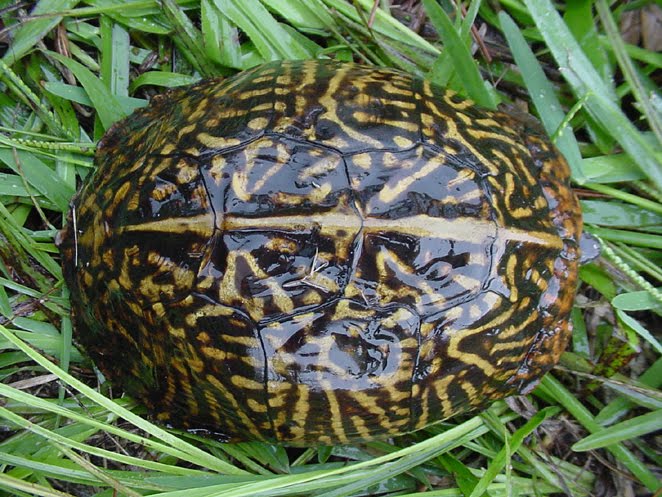
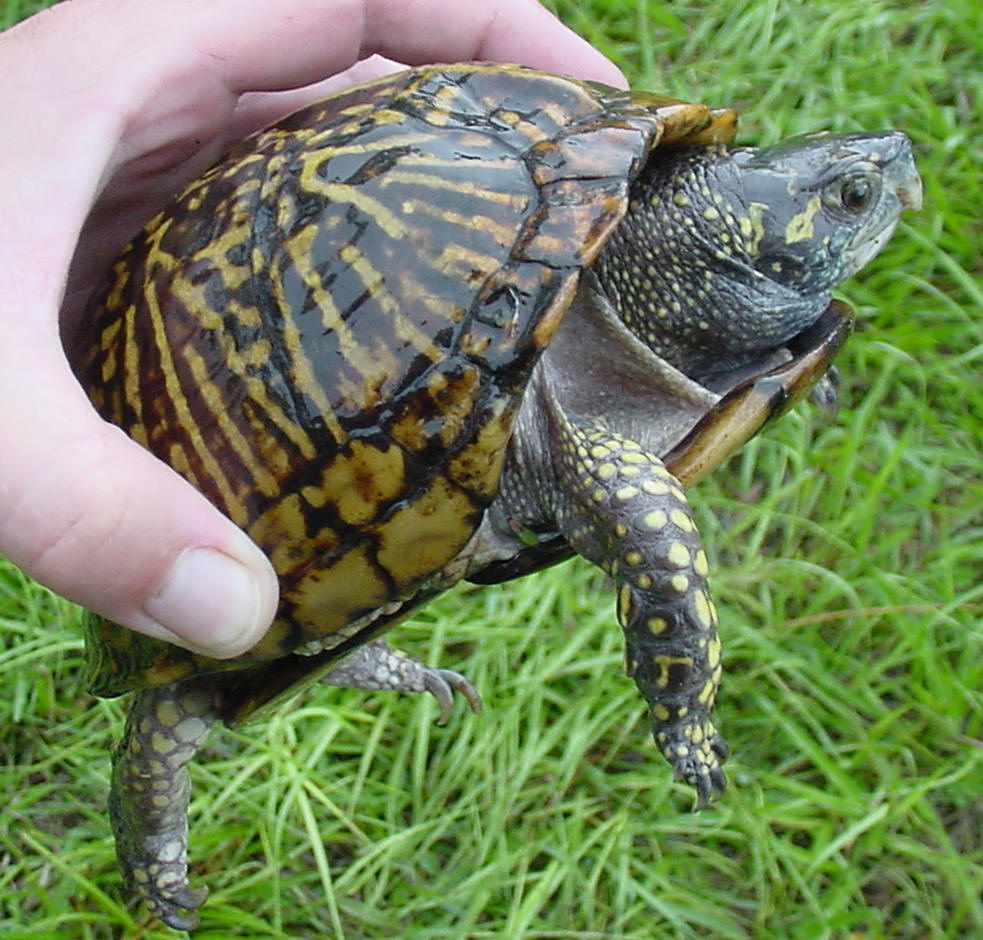
AMERICAN BOX TURTLES


North American box turtles are a common pet reptile. They are often sold as an easy-to-keep, problem-free pet that requires minimal care from their keeper. Although their care requirements are not as time consuming as that of a traditional pet like a dog, box turtles are not necessarily a simple pet to care for. Some specific requirements must be met for them to live well in captivity. They also have a long lifespan, and some have been documented to live for over 100 years in captivity. It’s important to consider both that their care requirements may be difficult to meet and that they have a long lifespan prior to purchasing a turtle. If the proper research is done before buying a box turtle and it is a well-planned decision, box turtles make great captives and are a pet that can be enjoyed for decades.

North America is home to diverse populations of turtles and tortoises. This webpage will cover some of the more common turtles encountered in the in the pet trade. This is a new page, with only three genera so far, but more info and more species will be available soon.

Box turtles are lovely creatures, and they can be good pets, but you need to think long and hard before you bring one home. While juvenile box turtles usually adjust to an indoor terrarium, most experts agree that the best housing for adults is outdoors. Unless you have the facilities to build a good sized outdoor pen for your box turtle, where it can spend at least a good part of the year, they you should think twice before getting a box turtle.
READ MORE - AMERICAN BOX TURTLES

Mud and Musk Turtles


Mud and Musk Turtles can be differentiated by examination of the lower shell (plastron). The lower shell of the Musk Turtle is considerably smaller than that of the Mud Turtle. Both turtles have front and rear lower shell hinges; however, the hinges of the Musk Turtle as less apparent and less moveable. Neither turtle's lower shell is sufficient to provide complete enclosure of the head, legs and tail, as in the Box Turtle. The pectoral scute (the parts of the lower shell immediately adjacent to the front hinge is triangular in shape on the Mud Turtle and roughly rectangular on the Musk Turtle.

Eastern Mud Turtles are found throughout South Carolina. Eastern Muds and other subrubrum subspieces generally range along the eastern coastal states from New Jersey to Texas, and into parts of Arkansas, Oklahoma, Tennessee, Kentucky and Illinois. The Striped Mud Turtle is found only in extreme southwestern portions of South Carolina near the lower Savannah River. Striped Muds are also found in coastal Georgia and the pennisula of Florida. Common Musk Turtles are found throughout South Carolina. They also range throughout most of the eastern United States, and west to eastern Nebraska to eastern Texas.

SIZE
Most musk turtle hatchlings are very small. These small babies, however, are great feeders and are very hardy. Offer them an enclosure with water that is filtered and warmed to the 74-78° F (23-26° C) range. They need to be able to climb out of the water to bask, so keep the water level low (3-4 inches), offer them plenty of decorations, and place UVB-emitting bulbs over them. The decorations should provide them underwater exploration sites and also break the surface of the water to offer a good basking site. A spotlight with a low-wattage bulb (40-watt or 60-watt) should be placed over the most accessible basking spot. This basking spot should reach 85° F (29° C) during the hottest part of the turtle’s afternoon. Young musk and mud turtles will feed on a variety of food. They love guppies and mosquito larvae and will feed on blackworms and small redworms and will soon begin taking a variety of commercial pelleted food.

Most remain small, with Common Musk Turtles (Stinkpots) reaching only 4 inches. Most of the Central American species reach 6-7 inches and the very aggressive Giant Musk Turtle (Staurotypus triporcatus) can grow to 15 inches.
READ MORE - Mud and Musk Turtles

Sea turtle


In spring and summertime, females crawl onto nesting beaches during the night. They venture far enough so that they the reach the hightide mark. The female loggerhead then finds a suitable nesting site and once found, she digs a hole using her front limbs, lays her eggs in the nest (clutches are usually 120 eggs), and uses her hind limbs to bury her eggs. The eggs incubate for between 31 and 65 days. When they hatch, the young turtles move quickly to the water.

Green sea turtles have persisted since prehistoric times, but are endangered today. Only a small fraction of hatchlings survive and even fewer go on to reach adulthood and reproduce.

Andre is believed to be about 25 years old. The hope is that he will swim off, mate often and help his species survive.

Go out and live long and prosper and have lots of babies,” said Aaron Lichtig, a 40-year-old science teacher who was among those who first spotted the turtle and brought him to shore.

A moment later, he disappeared below the surface, only to pop his head up a few more times, delighting the crowd.

It’s just an inspiration,” said one volunteer, 17-year-old Kelly Griffith, who wiped tears from her eyes. “Every turtle is special, but he captures hearts.”

Sea turtle (or seaturtle) is the common name for any of the large marine turtles comprising the superfamily Chelonioidea, characterized by forelimbs in the form of large flippers or paddles. There are two extant families, Cheloniidae and Dermochelyidae. Members of the family Cheloniidae are characterized by a lightweight, low shell covered with scutes, while the sole extant species in Dermochelyidae, the leatherback sea turtle (Dermochelys coriacea), is characterized by a teardrop shaped carapace lacking epidermal scutes and covered with a leathery skin. Members of both families have a large head that cannot be retracted into the shells. There are seven living species, arranged into six genera. Three extinct genera also are recognized. Sea turtles are found worldwide in all the world's oceans except perhaps the Arctic Ocean.
READ MORE - Sea turtle

Black Mud Turtles


East African Sideneck Black Mud Turtles are carnivorous, but the young and sometimes even adults will also eat aquatic plants such as algae and water grass. They also feed on insects and other small water creatures, snails, small fish, frogs and salamanders, and crabs. In captivity many do well on commercial floating turtle food and live foods, supplemented occasionally with low-fat dog food, trout chow, apples or bananas, and you will also need to provide them
with a cuttlebone or other calcium source.

African Mud Turtles should not be kept with other turtle species, as they can be aggressive. They will also kill fish, frogs, mice, and even birds, and maybe even the occasional finger. But they are said to tame easily and become hardy pets that are pretty easy to keep healthy. And
because they will breed in captivity, at least in outdoor ponds, they are a suitable species for the pet trade.

If you must keep your Gaboon Side-neck Terrapin indoors, a juvenile will need at least a long 20 gallon vivarium. Provide any turtle, of course, with as large a home as possible. Your turtle needs swimming room. The water should be at least as deep as the turtle's width, and heated by an underwater heater to the high 70s-low 80s F. and a pH of 6 to 6.5. Filter the water well mechanically or change it completely several times a week or you will have to deal with shell infections. You may want to feed your African Sideneck in a separate tank to help keep his primary habitat cleaner.
READ MORE - Black Mud Turtles

Monday, August 8, 2011

Anggang-anggang


Anggang-anggang a group of insect predators that are all included in the tribe Gerridae. Its members, around 340 species, many of which are difficult to distinguish. In the literature also mistakenly known as "water spider", although he was not a spider. The name "anggang-anggang" itself comes from the movement back and forth as she floats

This insect is easily recognizable because of his habit of always running / jumping in the water. His movements were quick, can reach 1.5 m / s. Most live in calm waters, but there are five types (from clan Halobates) are known to live on the ocean surface. Of surface water, anggang-anggang eyeing prey (usually other insects) that is near the surface.
These animals became models in biophysics research about the ability of the surface pressure in the load. There are two aspects of concern: the ability to float on the surface and its ability to move forward quickly.

Buoyancy comes from the presence of very small hairs (microsetae) arranged with a certain direction with the indentations in the nanometer size at the end of her leg and is equipped with a layer of night (wax), but more hydrophobic effect caused by the physical structure of the leg rather than lining the existing night . It is well known, there is an effective limb contact angle with water of 167.6 ° ± 4.4 °. Because small dense hairs and indentations there, the air trapped in the structure and function as a "cushion" on the surface of the water.

The ability to move rapidly also attracted the attention of scientists. To move, anggang-anggang hit the water with a couple middle legs without penetrating the surface, forming depressions in the surface. Basin is deep enough to push the insect forward. In addition, some individuals can use the wings that are sometimes possessed by these insects. In less favorable living conditions, anggang-anggang tend not winged.

Anggang-anggang (Gerridae)
Anggang-anggang Gerris remigis
Scientific classification
Kingdom: Animalia
Phylum: Arthropoda
Class: Insecta
Order: Hemiptera
Suborder: Heteroptera
Infraordo: Hemiptera
Family: Gerridae
Leach, 1815

Genera
Aquarius
Eotrechus
Gerris
Halobates
Limnogonus
Limnoporus
Metrobates
Neogerris
Rheumatobates
Trepobates
READ MORE - Anggang-anggang

Alap-alap

Kestrel china

Kestrel black

Kestrel crested lizard

Kestrel Jambul

Kestrel Brown

Kestrel Rat


Kestrel is a kind of bird is closely related to hawks and eagles, including the genus Spiziapteryx and Microhierax of the family Falconidae.

Bird is the world's smallest carnivore Alap-alap Dragonflies (Microhierax fringillarius) which can be found in Southeast Asia, and Microhierax latifrons which can be found on the island of Borneo. Average size of 15 cm with a weight of 35 grams.

Circumcincta Spiziapteryx the kestrel with patterned wings berhabitat spots in some areas in Argentina, but now belong to the rare animals.
READ MORE - Alap-alap

Tarsius


Kingdom: Animalia
Phylum: Chordata
Class: mammals
Order: Primates
Family: Tarsiidae
Genus: Tarsius
Species: 9 types
Habitat: Indonesia nd philippines
Food: Insects nd small reptiles
Status: Almost extinct

Tarsier is a unique and rare animals. These small primates are often referred to as the world's smallest monkey, even though these animals are not monkeys.
At least there are 9 types of Tarsier in the world. 2 species in the Philippines and the remaining 7 there is another type in Sulawesi, Indonesia. The most famous tarsier tarsier Tarsier Tarsier manifold (monkey ghost) and Tarsius pumilus (Little). Into two types there are in Indonesia.

All types of Tarsius including rare and protected animals. Tarsius activity only in the afternoon and evening. Their prey are insects and small reptiles such as birds and bats.

The uniqueness of Tarsius:
1. His eyes were huge, bigger than its brain
2. His head can rotate right and left to 180 degrees
3. Interchangeable ear digerak2an
4. He was able to jump as far as 3 meters
5. She gave birth to cra dependent dg

Tarsius including a remarkable animal. He was able to jump as far as 3 m of tress one to the other trees. Tiny tarsier primate practically feasible because of its length about 10-15 cm with weight of 80 grams. There was even Tarsius which has only 93-98 millimeters long with 57 grams brat.
Tarsier can be found in National Parks and Protected Areas Batimurung Tangkoko.
Currently Tarsius left only about 1,800 birds
READ MORE - Tarsius

polar bears


Two-thirds of polar bear populations will be extinct by mid century. In recent decades the North Pole (Arctic) will lose a very large ice so that no more polar bears that can live on it.

Geological Survey Institute said in a statement the United States (USGS). News.bbc.co.uk site states the U.S. government is funding research to consider whether polar bears deserve inclusion in the national list of endangered animals under the Endangered Species Act. Final decision about this will be issued in January 2008.

Species of polar bears (Ursus maritimus) is now classified as highly susceptible animals and internationally have entered the Red List of Threatened Animals. Experts also estimate 40 percent of the habitat of polar bears will disappear by 2050.

Last August scientists Snow and Ice Data Center U.S. National declare Arctic summer ice is currently 30 percent below average during this time. The institute predicts 2007 is the lowest in the thickness of ice in the Arctic for thousands of years.

USGS report was released as the U.S. government negotiated document the Sydney Declaration on climate change at a meeting of Asia-Pacific Economic Forum (APEC) in Australia last week. The negotiations were aimed at reducing the growth of harmful gas emissions into the atmosphere on a voluntary basis. (E4)
READ MORE - polar bears

Albino


Albino is due to various gene mutations that affect the production of normal pigmentation. True (amelanistic) albinos lack melanin and are white with no markings and with unpigmented pink eyes. Partial (blue-eyed) albinos have some residual pigmentation. There are various degrees of patchy albinism (piebaldism) due to localised mutations in skin cells. Temperature dependent albinos have residual colour on cooler parts of the body i.e. Siamese cats where pigment develops on the head, tail and legs, but not on the warmer parts of the body.

Bluish-grey anerythristic albinos lack the red colour. Axanthic albinos lack the yellow colour. The actual colour and pattern of these animal depends on what other colours are in the pattern. Tyrosinase-negative albinos lack tyrosinase (an enzyme which synthesises melanin) in their cells; this usually produces a pale yellowish or cream animal with pink-eyes. The more common Tyrosinase Positive albino cannot synthesise melanin, but can synthesise tyrosinase, giving a fawn or lavender (platinum) colour.

Leucism is often mistaken for albinism. Leucistic animals, such as white lions, are white or very pale, with dark eyes and some pigmentation, for example ghost markings. Chinchilla is sometimes mistaken for albinism, but is caused by a different mutation that affects the distribution of pigment on the hair shaft. White tigers are chinchilla. Other mutations also cause white animals; some of the animals pictured here (white peacocks) are white, but not albino.

Some of the photos of white, albino and pied animals on these pages are from the early 1930s encyclopaedias "Wonders of Animal Life" (edited by J A Hammerton) and "Wonderland of Knowledge" (edited by Ernest Ogan). Some of those specimens were photographed in captivity and are now preserved in the Rothschild Zoological Museum.

Up until the late 19th Century it was common practice for naturalists and explorers to shoot and preserve unusual specimens. Not till the 20th Century did photography become a practical alternative. The majority of the museum taxidermy specimens on these pages are from the Walter Rothschild Zoological Museum, Tring, England and the Natural History Museum, South Kensington, London, England.
READ MORE - Albino

Sunday, August 7, 2011

fish stingray


fish stingray or Dasyatidae saintifik name is kind of a family of fish found throughout the world.

stingray is brothers with jerung fish. But unlike fish jerung, which is a predator who menggerunkan with powerful jaws, stingrays rarely menugut human and a small mouth is not a threat at all.

Border stingray's tail are approximately 8-inch spurs that diselitupi with the same ingredients that make up the scales yu, identified as dentikle dermis (dermal denticles). Hujung, which become hard and tense when a stingray feels threatened, shaped like a serrated knife and a meat can be a threatening predator.
READ MORE - fish stingray