Wednesday, October 26, 2011

Bees Tiger


Bees Tiger
This giant-sized bees are insects that live in Asia. Insect which is the mortal enemy of a praying mantis has a sting that is large enough to kill a profit - big profits as the tarantula. This bee venom possess a higher dose of any bees, so that it can cause death to humans when stung by bees in large quantities.

In Japan alone, the bee is at least killed 40 people in a year and make people fear. Bees sting Tigers actually only use as a defense, and to hunt prey, they use powerful jaws to kill smaller prey.

There is a story about these bees, a rancher from the European honey bee bee Tigers try to combine this with the type of honey bees for the purpose of crossing the two types of bees for honey production more because of the size of the tiger a larger bees than honey bees.

But what happened? Bees tiger numbered only a few are destroying all of the honey bee colony in just a few days.

No one was left of the honey bee, all killed by a tiger bee, the European honey bee colonies when it amounted to about 30,000 bees. Maybe that's depiction of how ferociously these bees, but bees are not the type of bee honey bees from fittest because Japan has a trick and a special way to kill bees this tiger.

First they will encircle this tiger bees, then by relying on their numbers are many, they form a dense ball-shaped formation and swarms of bees surrounded the tiger.

This Japanese honey bees then begin to flap their wings more rapidly, giving rise to heat in the formation of the ball until the temperature reached 47 degrees Celsius.

At this temperature, tiger bee trapped in the formation of solid ball was not going to survive and will die slowly. Proverb sky above the sky is still there seemed indeed suitable for this story.
READ MORE - Bees Tiger

grasshoppers Worship


grasshoppers Worship
Praying mantis is one of the best insect killer with physical support that support it as a true predator. Although the species is also widely, but the praying mantis or mantis famous for its specially designed front legs to capture prey.

These insects are waiting for their prey by relying on camouflage his body and when its prey by, he will soon be ambushed by a high speed. Preying mantises usually animal - small animals. These insects are also known to eat their prey directly because he also has a strong jaw.
READ MORE - grasshoppers Worship

insect killer


insect killer
Insect killer is a type of insect that has the ability to kill the best among insects - insects. There are many kinds, but most are harmless to humans.

Oh yes, insects - insects have their own specialty in killing prey. There are species that only kill the spider, there is also the only hunting ants and flies.

Insect killer armed with the mouth shaped like a needle, which serves to inject a lethal saliva. Water will digest the eggs of this organ in the prey.

Like other insects that are not capable of consuming prey directly, the insect is sucking the body fluids of its prey. Not pictured is not what if these giant animals.
READ MORE - insect killer

Anai - termite


Anai - termite / retreat - retreat
Anai - termite insect is certainly not familiar to us. Animals are believed to be a blood pressure-lowering drugs should not be underestimated. Possible for us termite - a small insect termite only unique because of its unique way of movement, which is backwards.

But for insects - insects such as ants smaller, termite - termite is a ferocious predator that should be avoided. Anai - termite itself is a larval stage before metamorphosis perfect.

Usually termite - termite found in many places - sandy places due to their anatomy and how to move termite - termite is perfect for making a sand trap in place.

Anai - termite will wait grounded funnel-shaped trap, and when there is an insect that unlucky because of a fall in the trap, the insects will be difficult to escape.

Because the trap is located in sandy areas, then the prey will be difficult to ride because he would slip back and become termite food - termite. If you are curious, please see the termite nest pictures - termite on top of this, if there are ants that happen to get into his trap, then you will see how it kills its prey insects perfectly.
READ MORE - Anai - termite

Tiger beetle


Tiger beetle
Everyone also knows if the cheetah is the fastest animal on earth that can run up to 115 km / h. Compared with this tiger beetle, would be very much the comparison because the beetle is only capable of running at speeds up to 8 km / h.

But wait, if the size of the beetle is similar to the cheetah, the cheetah will then struggling pursuing this weevil because it is capable of running as fast as 500 kilometers / h and probably will replace the cheetah as the fastest animal on earth, even the artificial mass supersport car will be difficult after him.

That glimpse of the capabilities of this beetle. He moves so fast, until - until he had to stop several times to determine the location of prey.

After he determines the location of prey, he ran quickly to grab its prey. Besides relying on speed as a weapon to kill prey, beetle also has a strong jaw.

Because of its exceptional ability, this beetle used by humans to control pests such as caterpillars, grasshoppers and other insects.
READ MORE - Tiger beetle

The robber flies


The robber flies

We all must be familiar with the flies - flies flying around us. Flies are more commonly known as a carrier of disease germs, even from the school, the flies are considered as detrimental to the human animal. Flies that we often see at home is just one of many fly species ever found.

According to scientists, about 120,000 species of flies have been identified and some of them are deadly predators are completely different from that we often encounter flies, and robber flies are one of them.

These flies have a sharp eyesight, can fly at high speeds, and catch their prey in midair. When the fly gets its prey, he will inject a neurotoxin through his mouth and digestive juices which are designed in such a way, then he would suck the prey body fluids to dry.

Almost all kinds of small insects are the prey of these flies, even jairng spiders are not able to withstand the strong pace of these flies. Although these flies have a poison, but it is not harmful to humans, only if bitten by flies, then the pain will be tremendous.
READ MORE - The robber flies

adult Goliath Beetle


The beetle will then harden, to a shell called an exoskeleton, still underground.
When the wet season arrives again it will be awakened to emerge from its underground home when the water soaks down to soften the shell of its encasement.

He or she will then fly away in search of a potential mate and the entire things begin again.

Adult Goliath beetles will eat nearly any food that is high in sugar or glucose, particularly tree sap. They will also eat fruit, when it is very ripe.

Goliath beetles have a first pair of wings which are protective covers for their secondary pair of wings. Only the second pair of wings is actually used for flying.

The adult Goliath Beetle will take flight immediately, in search of mating opportunities. Though in captivity the Goliath Beetle is known to live for up to a year, those in the wild have a much less stable and protected life. He has many predators, and is often wrecked by harsh weather patterns. Feasting on the compound sugars in over ripened fruits and dense saps, he will settle with fresh fruits when supplies are short. His most important job finished with the completion of the mating season, the Goliath Beetle is merely wandering about in hopes of finding delicious treats. The end of his life in the wild usually occurs with 6 to 8 months of his first flight.

Goliath beetles are some of the largest insects in the world both as adults and larvae. It is thought that Goliath beetles are the heaviest of all the insects. Larvae can weigh as much as 100 grams and adults 50-60 grams, the adults can also reach 12 centimetres in length.

Goliath beetles are a subfamily, the Cetoniinae, within the Family Scarabaeidae (the Scarabs). The beetles are native to tropical regions of Africa. Adult beetles feed on plant sap or fruit but little is known about the larvae which can feed for many months before pupating. It is thought the larvae feed on rotting wood in the wild but, evidence from rearing these beetles in captivity, suggests they require more protein in their diet than other scarab beetles.
READ MORE - adult Goliath Beetle

Horse fly


Horse fly repellents are today very common chemicals readily available offline as well as online, so very technically, you are literally a few clicks away from some serious horse fly control treatments if you happen to have an infestation on your property. Normally, if you purchase a good repellent product, treatment will only consist of spraying the chemical on your horse to make sure the offensive horse flies are kept at bay. Alternatively, it is generally acknowledged that you can create your own horse fly repellent at home rather successfully. Many people are known to have done so. One of the most popular recipes is as follows. If you take half a teaspoon of what is known as myrrh oil and mix it with 2 cups of water, half a cup of apple cider vinegar and like a quarter of a teaspoon of citronella oil, it should turn out to be a perfect horse fly control repellent. It is also believed that adding like a tablespoon of apple cider vinegar to your horse’s feed on a daily basis helps. This is because this makes the horse smell slightly like vinegar, a scent most horse flies detest.

Horse flies and deer flies are intermittent feeders. Their painful bites generally elicit a response from the victim so the fly is forced to move to another host. Consequently, they may be mechanical vectors of some animal and human diseases.

Horse flies and deer flies can be serious nuisances around swimming pools. They may be attracted by the shiny surface of the water or by movement of the swimmers. There are no effective recommendations to reduce this problem.

Horse flies and deer flies like sunny areas and usually will not enter barns or deep shade. If animals have access to protection during the day, they can escape the constant attack of these annoying pests. They can graze at night when the flies are not active.
READ MORE - Horse fly

Friday, October 21, 2011

black mamba


The black mamba is Africa’s deadliest snake. Untreated, its bite has a fatality rate of 100 percent, making it a killer among killers on a continent where it is thought that nearly 20,000 people die of snake bites each year, and the residents of Swaziland in southern Africa have suffered losses for generations. With essentially no access to anti-venom, many people turn to traditional healers for help, but their herbal remedies always fail, leaving Swazis feeling fearful and defenseless against one of their nation’s most infamous killers.

Swaziland resident Clifton Koen doesn’t really care for snakes, but his wife, Thea Litschka-Koen, is crazy about them. With her husband’s sometimes reluctant help, she has endeavored to change attitudes about black mambas and other snakes found in the area. In addition to starting the nation’s only reptile park, devoted to educating the public and providing a refuge for the animals, the two have become the region’s go-to experts for safe, humane snake removal from homes, schools, resorts and workplaces. In the course of catching and relocating any number of snakes per day, Thea and Clifton give impromptu lessons about the snakes, covering fact and fiction, and do their best to prevent any unnecessary casualties – human or reptile.

In addition to their other efforts, Thea and Clifton developed a program designed to track black mambas in the wild for the first time and to gain new insights into their behavior. With the help of a snake expert from Johannesburg, they were able to surgically insert radio transmitters in a number of captured black mambas, allowing them to follow the snakes after their release. If their research pays off, they may be able to show that their relocations are working, successfully removing snakes from residential areas for the long term, and thereby bringing some relief to the locals and some respite for the snakes
READ MORE - black mamba

Western Tiger Snake


Western Tiger Snake is common over most of its range in south-western Western Australia. The stunning yellow pattern is typical of the Western Tiger Snake.

The Western Tiger Snake shelters in or under fallen and rotting timber, in abandoned animal burrows, and under rocks and dense vegetation.

Like all members of the Tiger Snake group, this subspecies is capable of delivering a fatal bite to a human.

Adults hunt for frogs, lizards, small mammals, and nesting birds during the day and evening, and are known to hunt for frogs on wet nights.

The Western Tiger Snake can get up to about 1.6 metres in length. When they feel threatened they flatten their neck out to make themselves look bigger.

Like the other Tiger Snake subspecies, Western Tiger Snakes produce live young. Up to 90 young can be produced in a single litter, but between 10 and 30 is a more common litter size.

Did you know…
The stunning yellow pattern is typical of western tiger snakes.
Like all members of the Tiger Snake group, this subspecies is capable of delivering a fatal bite to a human.
When the Western Tiger Snake feels threatened they flatten their neck out to make themselves look bigger.
Like the other tiger snake subspecies, western tiger snakes produce live young.
READ MORE - Western Tiger Snake

Tiger Snake


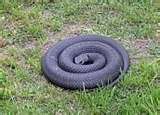
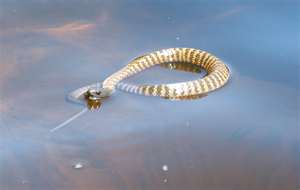
The Tiger Snake is on our most deadly list. The Tiger snake is between 1 to 2 meters in length. Its color can vary greatly from gray to brown to almost black with light yellow bands around its body. Some tiger snakes though, have no bands.

This is a shy snake which can easily be avoided by making lots of noise when you walk. They move away from danger. It’s a very venomous snake, and it will give a dangerous bite if trapped or mad. This snake has live babies, up to around 30 at a time! They are mostly born in the summer.

The diet of the tiger snake includes frogs, lizards, baby birds, and mice. This snake is becoming rarer because of several factors: the draining of the swamps for farming, the decline in the frog population (also due to the draining of the swamps), and the appearance of other snakes as the swamp land disappears. The new snakes tend to eat up all of the food that would normally be eaten by the tiger snake.
READ MORE - Tiger Snake

Scaled SAW VIPER


Scaled SAW VIPER

Saw scaled viper (Echis carinatus) distribution includes Africa, the Middle East, to India.
Although he was quite small, but in this case it includes the ranking ke9.hal killing was due to several factors that these snakes are very aggressive and capable of injecting 80% of his property without a doubt could ², unlike other venomous snake venom as a backup store. The second factor above causes can lead to death of this snake is quite a lot. The distinctive feature of this snake is that he make a sound by rubbing her skin so that it reads, in contrast with the rattle snake who wiggles his tail.

Color is light buff with shades of brown, dull red, or gray. Its sides have a white or light-colored pattern. Its head usually has two dark stripes that start behind the eye and extend to the rear.

A small but extremely dangerous viper. It gets the name saw-scaled from rubbing the sides of its body together, producing a rasping sound. This ill-tempered snake will attack any intruder. Its venom is highly hemotoxic and quite potent. Many deaths are attributed to this species.

Found in a variety of environments. It is common in rural settlements, cultivated fields, arid regions, barns, and rock walls.

Average 45 centimeters, maximum 60 centimeters.

Asia, Syria, India, Africa, Iraq, Iran, Saudi Arabia, Pakistan, Jordan, Lebanon, Sri Lanka, Algeria, Egypt, and Israel.
READ MORE - Scaled SAW VIPER

Snakes


Snakes are reptiles that no-legged and long bodied. Snakes have scales like a lizard and are equally classified into scaly reptiles (Squamata). The difference is generally legged lizards, have ears, and eyelids that can open the lid. However, for cases of no-legged lizards (eg Ophisaurus spp.) This distinction becomes blurred and can not hold onto.

The snake is one reptile that developed the world's most successful. In the mountains, forests, deserts, plains, farms, residential neighborhood, right down to the sea, can be found snake. Only, as is generally cold-blooded animals, snakes increasingly rare in cold places, such as on mountaintops, in the area Irlanda and New Zealand and the snow fields or polar regions.

Many kinds of snakes all his life wandering in the woods and almost never touch the ground. Many other kinds of reptiles live above the ground surface or infiltrate infiltrate beneath litter or a pile of rocks. While some of the other living aquatic or semi-aquatic in rivers, swamps, lakes and seas.

Snakes prey on various species of animals smaller than himself. Aquatic snakes prey on fish, frogs, tadpoles, and even fish eggs. Tree snake and terrestrial snakes prey on birds, mammals, frogs, reptile species, including the eggs. Big snakes like the python development may prey on goats, deer, deer and even humans.
Misguided Anaconda often happens when people called anaconda, anaconda snake species is not a name but it is another name for the genus Eunectes. Anaconda although he does not have a big can, they kill their victims by twisting and pressing his victim until eventually there were complications between shortness of breath and high blood pressure that led to the rupture of blood vessels (rupture., jd inget bloodseeker). This snake umumny solitary life with a broad area of ​​territory, in the movie Anaconda: The Hunt for the Blood Orchid Indonesia who take the setting d sebenarny Anaconda was not, but the snake killer to 6 we
READ MORE - Snakes

insects like crickets


In some countries such as China, Thailand, Laos, can we find a very unique food, ie insects like crickets, caterpillars, centipedes, scorpions can be eaten. There are certain circles who like to eat food like this. Obviously for us it is difficult to eat, because these insects are really disgusting to us. But if you want to just try and taste the little does not hurt anyway (?)


Besides the insects mentioned above, there are also other reptiles such as spiders, lizards and snakes. All this served in the form of fried foods. For if you want a fresh scorpion is provided that is still alive and ready to be fried. The price ranges between 10 thousand - 20 thousand dollars (if kurs right into our currency) 1 stitch.
READ MORE - insects like crickets

Komodo dragon


Some biologists have reported spectacular findings, which formed as a single species of giant lizard, reptile with a long-sized adults and awarded the two sexes.
Reptiles hidden but it's brightly colored, monitor lizard, is a close cousin of the Komodo dragon in Indonesia, said the biologist, on Wednesday (6 / 4), as quoted by AFP and Reuters.
But not like dragons, scary, it's the hunted animals for meat is a carnivore and do not eat rotten meat. In fact, the animal has always been peaceful and enjoyed the fruits.
The lizard, which is named "Varanus bitatawa", has a length of six feet but weighs only 20 pounds, according to calculations published by the Royal Society, Britain, and was quoted by AFP and Reuters.
The animal was found in a river valley on the island of Luzon, northern Philippines, once able to survive due to habitat loss and hunting by local people - who use it as food, says Rafe Brown of the University of Kansas - whose team confirmed the findings.
The number of lizards that survive unknown.
Species are almost certainly is a very endangered animals, and may already be extinct without inserted into the list if only large males was rescued by a hunter in June.
"Animals that live in trees, so his body can not for the Komodo dragon, a very large animals that eat so much fresh meat," Brown said by telephone told Reuters reporters. "These animals are predators of fruit and fruit-eating lizard third in the world."
Finding a large vertebrate species are rare events, Brown said. The lizard, new species of Varanus species, can be shy and hide from humans, its main predators, and may explain why the animal had gone undetected by scientists in a very long time.
Biologists first saw pictures of the brightly colored lizards in 2001, when people are researching the area to meet with some of the hunters who was carrying a dead lizard colorful, but the species at that time gave no scientific recognition.
Within a few years later, Brown said, experts etnobiologi kept hearing stories "about the two types of lizards are favored by many people because of their meat tastes better than the lizards that live in soil; animals were described as larger animals with more bright colors" .
Both types of lizards are described by the local community are two names for the same animal, Brown said.
In 2009, undergraduate students at the end of a two-month expedition constantly find signs of large lizards. There is a nail scratches on trees and shrubs pandanus tree, whose fruits are preferred by lizards.
Some hunters who had heard the team's interest to bring an adult male lizards are almost dead to their camp. The team shut down the animal and genetic examination confirm it as a unique species, Brown said.
DNA analysis shows there is a deep genetic differences between the new lizard and his immediate family, "monitor lizard", which are also predators of fruit but live in the southern tip of Luzon Island, and not in the far north - a place to live "monitor lizard" forest.
The discovery of such rare species in densely populated areas, places that have lost so many plants, "a wonderful surprise", according to some authors report in the journal Biology Letters.
Another important finding in decades is kipunji monkey, which inhabits a small group of forests in Tanzania, and saola-cow family that lived in the forest and is only found in Vietnam and Laos.
"Varanus bitatawa" has a unique and unusual sexual anatomy, the study said.
Legs and a scaly body filled with blue-black color with dots of pale yellow-green, while the tail marked with alternating sections of black and green.
Male lizards have two penises, called hemipene, which is also found in snakes and other lizards.
Both the penis is often used interchangeably, and sometimes contain spines or hooks that bergungsi as an anchor to attach the female lizard during a relationship.
READ MORE - Komodo dragon

Thursday, October 20, 2011

ctenidia


Attached to the dorsal surface of the visceral mass is and hanging freely down the sides of it is the mantle, often called the skirt or pallium. There is a space between the mantle and the viseral mass, this space is greatest towards the rear of the animal where it is called the mantle cavity or the pallial cavity. The mantle cavity generally contains the gills or ctenidia, a water current, generated by beating cillia, enters the mantle cavity at the sides, passes over the gills and departs centrally, i.e. the outward bound current runs out between the two inward bound currents. Near the head, just behind the mouth is a pair or more of ganglia and a nerve ring from which two nerve chords arise that reach out through the body. Molluscs are true coelomic animals, though the coelom they have is small, enclosing only the gonads and the heart where it is called the gonodial cavity and the pericardial cavity respectively.
READ MORE - ctenidia

Teredo navalis


Mollusc shells have also had a long history of usage by mankind, many have been used as decorations, or as a substance to carve into cameos and buttons. In North America Tusk shells on the west coast and Cockles on the East supplied the basis of a system of money, in many tropical countries the shells of coweries were until recent times used extensively in trade. Pearls, which arise in oysters as a result of the oysters attempts to cover up a grain of sand within its mantle, have been and still are much sort after. The 'mother of pearl' used to make pearl buttons comes from bivalve shells and so great was the market for it that the Mississippi and Missouri river basins have been seriously over collected and the bivalves are now quite scarce. In ancient times the city of Tyre was famous for its purple dye, this dye was made from a marine mollusc called Murex sp. while Sepia, a brown pigment used by artists was, perhaps still is, made from the ink of Cuttlefish. Not all the interactions between man and molluscs are to man's benefit however, slugs and snails are, in some places, serious pests of of crops, and are often a nuisance in peoples gardens. Wooden ships and wharves can be destroyed by burrowing bivalves such as Teredo navalis, known as ship worms, which weaken the timbers until they collapse or fall apart.
READ MORE - Teredo navalis

shells


Mollusc shells have also had a long history of usage by mankind, many have been used as decorations, or as a substance to carve into cameos and buttons. In North America Tusk shells on the west coast and Cockles on the East supplied the basis of a system of money, in many tropical countries the shells of coweries were until recent times used extensively in trade. Pearls, which arise in oysters as a result of the oysters attempts to cover up a grain of sand within its mantle, have been and still are much sort after. The 'mother of pearl' used to make pearl buttons comes from bivalve shells and so great was the market for it that the Mississippi and Missouri river basins have been seriously over collected and the bivalves are now quite scarce. In ancient times the city of Tyre was famous for its purple dye, this dye was made from a marine mollusc called Murex sp. while Sepia, a brown pigment used by artists was, perhaps still is, made from the ink of Cuttlefish. Not all the interactions between man and molluscs are to man's benefit however, slugs and snails are, in some places, serious pests of of crops, and are often a nuisance in peoples gardens. Wooden ships and wharves can be destroyed by burrowing bivalves such as Teredo navalis, known as ship worms, which weaken the timbers until they collapse or fall apart.
READ MORE - shells

Winkles


Molluscs, because of their ease of capture, edibility and beauty have long been important to mankind. Molluscs of many sorts are eaten by humans Abilone, Clams, Cockles, Muscles, Octopus, Oysters, Periwinkles, Scallops, Snails, Squid, Whelks, Winkles and many more are all molluscs and all make there contribution to the human diet. Mankind has been deliberately culturing molluscs as food for a long time and the earliest known records of someone farming molluscs for food come from Rome where one Sergius Orata bred oysters.
READ MORE - Winkles

Nautilus


Most molluscs are marine. Molluscs are very ancient organisms believed to have evolved from a flatworm like ancestor during the Precambrium about 650 million years ago. Because many species secrete a shell of some sort the fossil record is good. Different classes of molluscs have been predominant in the past and the Ammonites represent a group of Cephalopods which were extremely abundant for millions of years before they became extinct. There close relatives the Nautiloid cephalopods were also once very successful but are now only represented in the world by one species, Nautilus.
READ MORE - Nautilus